
For anyone who has ever loved a small corner of landscape.
About Thicket
This is jewelry that draws deeply from our connection to the natural world, and grants you a way to carry that connection with you.

About the Process
Thicket’s designer, Rebecca, intentionally curates natural objects with compelling forms and valences of meaning.
Each Thicket piece begins with taking a mold of the found or foraged natural object. This mold is used in the process of lost wax casting to create a perfect replica, in solid fine metal, of the original natural object.

Like many independent jewelry lines, we partner with a casting house. We've worked with ours for almost 10 years - an artisan casting house in New York City's jewelry district.
The castings arrive back in our Portland, Maine studio raw and we utilize special finishing techniques to preserve the organic forms and textures. From there each casting is incorporated with heirloom care, by hand, into finished jewelry.
We use recycled fine metals and strive for sustainable studio practices.

Values
A respect for, and attention to, the world around us is infused in Thicket's designs and informs the practices we hold to.
We are meticulous about our sourcing and the vendors and partners we work with. We offer lifetime repairs on all Thicket jewelry.
1% of Thicket's annual revenue goes to environmental causes as part of our 1% For The Planet commitment.
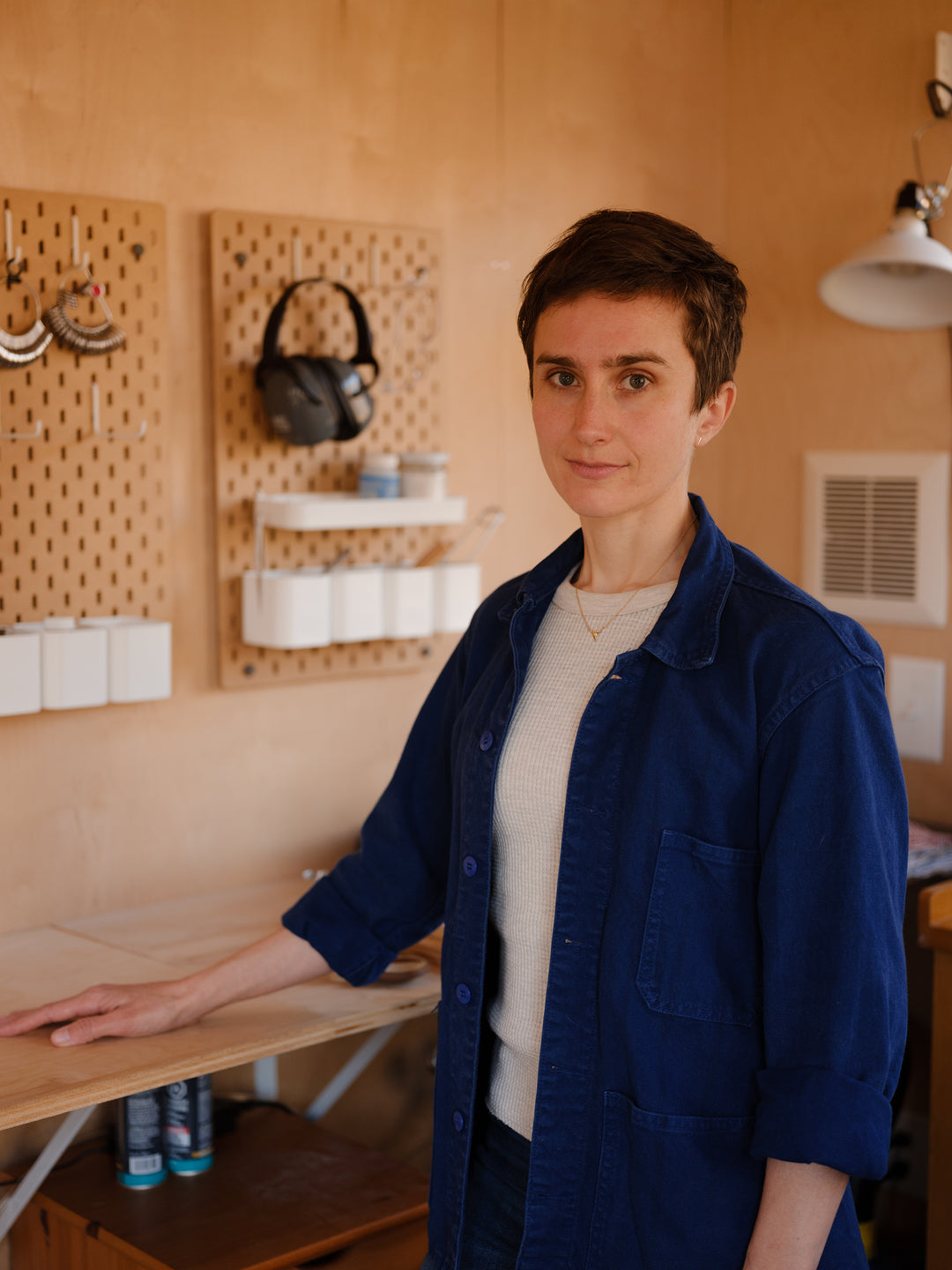
Rebecca Perea-Kane
Rebecca grew up in New England fascinated by wood frogs, painted turtles, and pitcher plants.
After working for other independent jewelry and textile designers, and an MFA in poetry, Rebecca launched Thicket in 2014.

Thicket’s Portland shop
Thicket shares a retail space with Moonday Coffee, owned by Rebecca’s partner, David and Mari: a mini bakery owned by our friend and collaborator Kelsey.
When you visit us on Washington Ave you’re visiting three businesses that are dedicated to doing things intentionally. Although we’re each working in different mediums we share a belief in the beauty of things made carefully with human hands. And that operating intentionally tiny-ly is a rebellion in favor of the human, the environment, and our community.
Thicket is located within ancestral Wabanaki territory now called Maine.
